NOYES
SOBINARISM
THE ARTISTIC SYSTEM OF THE TSIFROVEKOVIE ERA
Philosophy · Theory of Meaning · Language · Art
Every cultural era creates its own way of understanding and interpreting the world.
The archaic age explained reality through myth. Antiquity understood it through philosophy. The scientific age through experiment and the laws of nature.
The industrial age through production and technology. Today humanity is entering a new cultural era.
We call this era Tsifrovekovie.
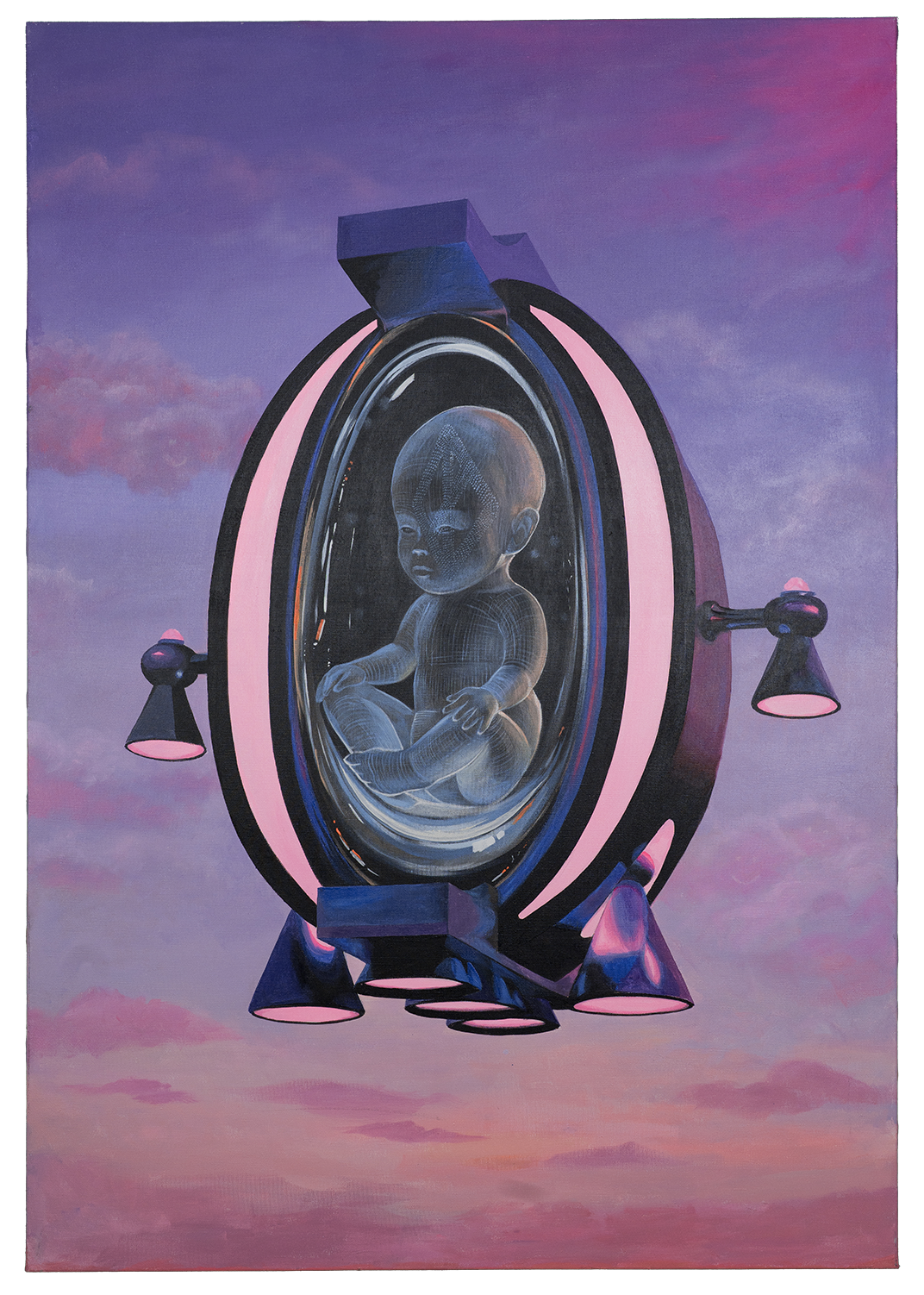
Sobinarism is the artistic system of the Tsifrovekovie era, in which the birth, evolution, and preservation of meaning are understood through the coexistence of two fundamental principles — 0 and 1 — within the space of the Qubit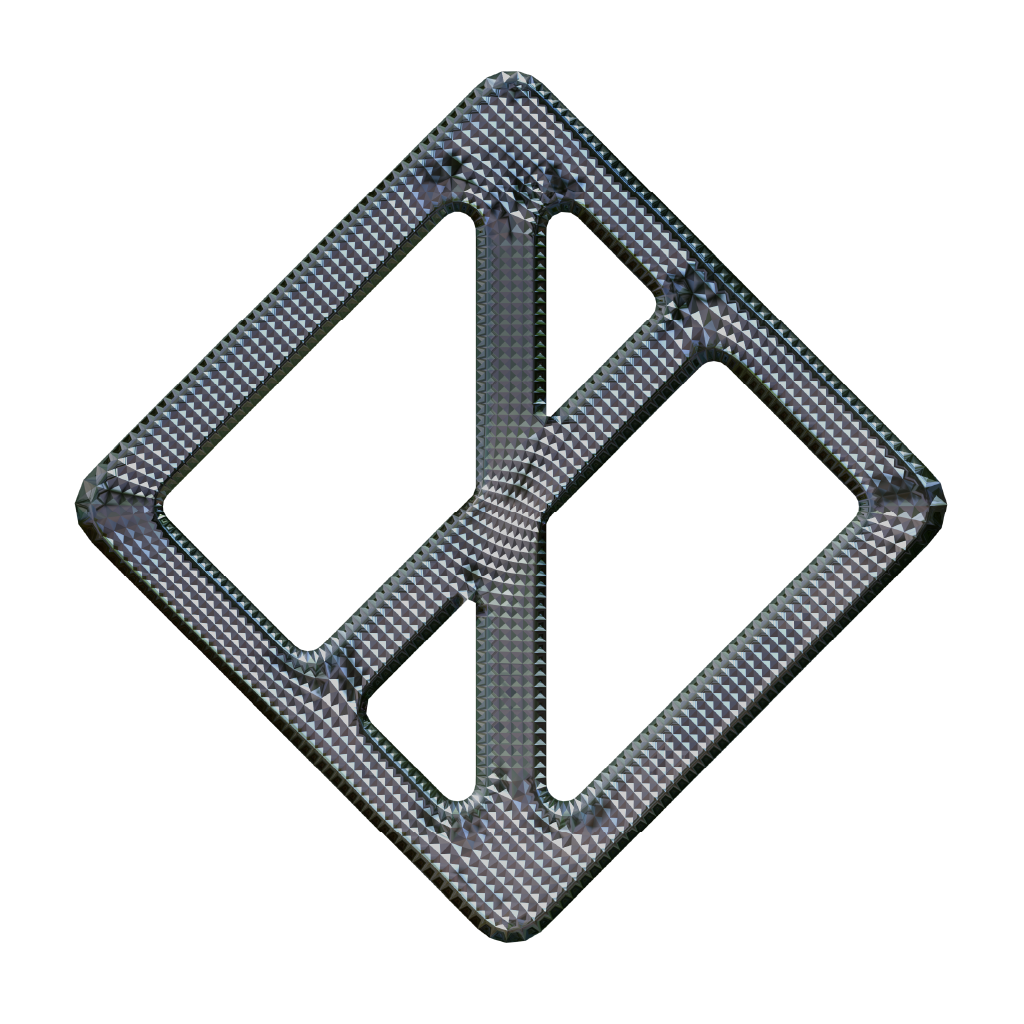 .
.
0 signifies potentiality.
1 signifies manifestation.
The Qubit ( ) is the space of choice in which meaning comes into being and is conveyed through the traditional forms of visual art.
A work of art fully reveals its meaning only in the moment of its encounter with the viewer, who becomes an essential participant in the emergence of a new cultural experience.
Sobinarism inherits the cultural tradition while expressing its continuity in the language of a new era.
If language, in its conventional sense, serves to convey meaning, Sobinarism works with the language of meaning itself.
A work of art does not illustrate ideas; it exists as an independent form of meaning.
Sobinarism holds that meaning is born within the Qubit, passes through seven phases of evolution in the Tsifrospiral, and is preserved in the cultural memory of Tsifrat.
Connection — meaning enters into relationship with other meanings.
Transformation — through these relationships, the inner structure of meaning is revealed.
Acceptance — the manifested form enters Tsifrat, becoming part of its cultural memory and opening the possibility for new meanings to emerge.
Thus, meaning evolves along an ascending spiral. Tsifrat is a new cultural space in which meanings evolve, connect, and are preserved.
The quantum-binary language of Sobinarism is founded upon the dynamic relationship between 0, 1, and the Qubit ( ). Within this system, code no longer serves as the representation of words; it becomes the very architecture of meaning.
A sequence of symbols does more than describe experience — it determines its internal organization. The Qubit preserves multiple potential states of meaning until the moment of perception.
Reading therefore becomes an act of choice, while understanding unfolds as one of several possible interpretations. Every new configuration of symbols opens a previously nonexistent space of meaning.
In this way, an artistic language emerges that is capable of expressing phenomena for which culture has not yet developed a vocabulary.
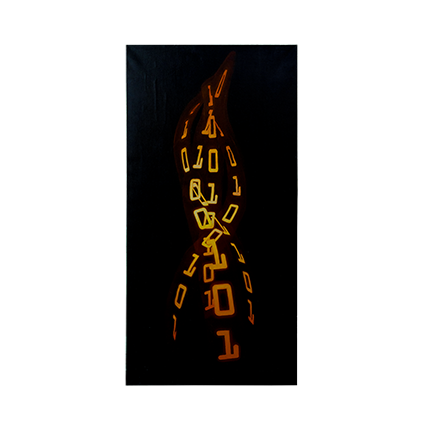
The Codosphere is one of the first works in which the artistic language of Sobinarism begins to function as a coherent system.
Within the Codosphere, the encounter of opposites becomes the source from which new meaning emerges.
Meaning no longer exists within isolated images. It comes into being through the relationships that unite them.
The evolution of meaning unfolds through the following sequence:
1 → 0 → 10 · 01 → 101 → 0100 → 1101 → 111 → 11101111 → 110110110 → 10011001 → 01101001
1 enters 0 through 10, overcomes 01 by way of 101, is preserved in 0100, is revealed through 1101, is strengthened in 111 and 11101111, gathers itself in 110110110, becomes conscious of itself in 10011001, and comes to completion in 01101001.
Every work created within Sobinarism is an autonomous statement in the artistic language of the Tsifrovekovie era.
A painting is not merely an object to be observed. It is a space in which meanings are born, evolve, and enter into dialogue.
Each work introduces a new concept into culture. Each expands the vocabulary of Sobinarism. Each reveals previously unseen relationships between meanings.
No work repeats another. Every new painting becomes the next stage in the evolution of the artistic system.
Taken together, the works form a unified architecture of meaning in which each piece retains its individuality while contributing to the common language of Sobinarism.
A work of art should not be understood solely as an image. Its true significance lies in the network of relationships it establishes — with other works, with the viewer, and with the evolving language of Sobinarism.
Meaning is therefore never static. It continues to unfold through every new encounter, every new interpretation, and every new cultural context.
In this sense, every viewing becomes an act of co-creation. The work is completed not when it is finished by the artist, but when it enters into dialogue with human consciousness.
Sobinarism is an open artistic system. Its philosophy, vocabulary, and artistic language continue to evolve together with the culture of the Tsifrovekovie era.
Every new work expands the field of meaning. Every new concept creates the possibility for those that will follow. Every new author carries the artistic language forward while preserving its foundational principles.
Sobinarism is therefore not a finished movement. It is a living cultural system whose future depends upon the continued creation of new meanings.
NOYES is a contemporary artist, philosopher, and the creator of Sobinarism — an artistic system that explores the birth, evolution, and preservation of meaning in the era of Tsifrovekovie.
His work brings together philosophy, visual art, and the quantum-binary language into a unified cultural framework for understanding the relationship between human consciousness and artificial intelligence.
Through painting, symbolic systems, and theoretical writing, NOYES develops a new artistic language in which works of art function not merely as images, but as autonomous structures of meaning.
Sobinarism is both an artistic practice and an open philosophical system that continues to evolve through new concepts, new works, and new cultural dialogue.